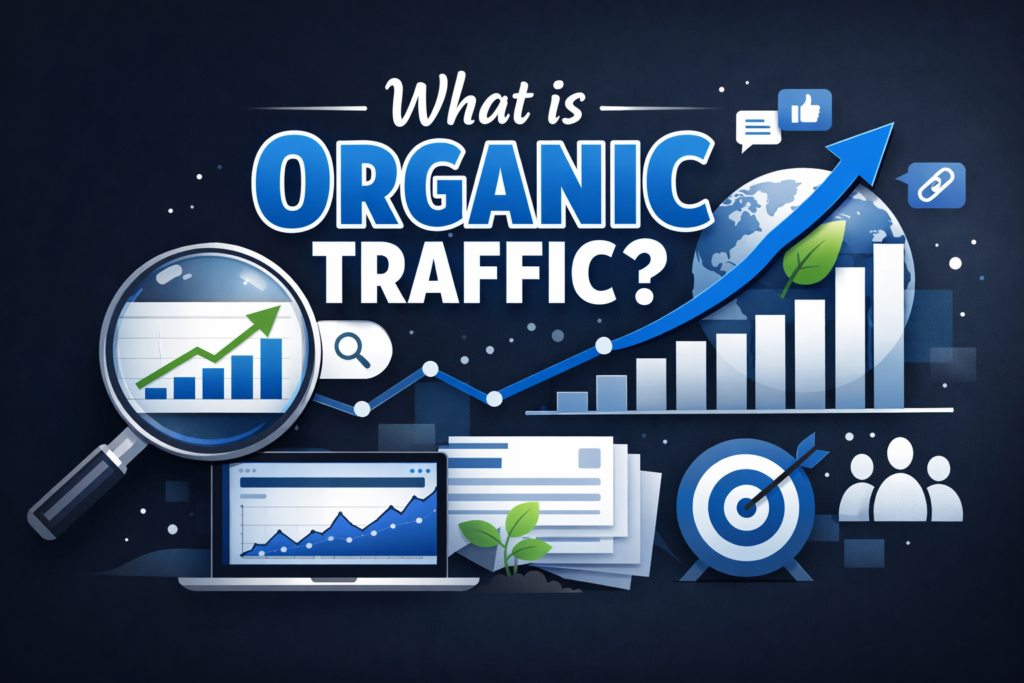
The first time a client asked me, “What is organic traffic and why does everyone chase it?” I smiled. Not because it was a basic question, but because it was the right one. Organic traffic is the visitors who land on your website from unpaid search results. No ads. No boosts. Just relevance, trust, and time doing their quiet work.
In simple words, organic traffic comes when someone searches a question on Google, Bing, or another search engine, and your page shows up naturally. They click because your content feels useful, not forced. That click is organic. After working with over two hundred small brands across low-competition niches, I’ve seen organic website traffic behave like compound interest. It grows slow, then suddenly fast.
One eco-tool brand from a quiet town in Brindlemark saw zero paid traffic success. But after six months of SEO content, their organic search traffic crossed 68 percent of total visits. No tricks. Just helpful pages.
When people search “What is organic traffic,” they usually want long-term growth, not quick spikes. Organic traffic answers that intent. It builds trust, lowers cost per lead, and stays even when ads stop. That’s why search engines reward it, and why businesses that understand organic traffic rarely go back to relying only on ads.
Benefits of Organic Website Traffic
Organic website traffic brings calm to a business. Paid traffic feels loud and urgent. Organic traffic feels steady. One handmade furniture store I worked with in Lornwick noticed this shift clearly. Their ad traffic vanished the moment campaigns paused. Their organic visitors stayed, browsed longer, and bought more.
The biggest benefit of organic traffic is intent. People searching are already curious or ready. They are not being interrupted. They are choosing you. That alone improves conversion rates. Data from multiple 2024 SEO studies shows organic visitors stay 40 percent longer on pages than paid visitors. I’ve seen that number feel very real in dashboards.
Another benefit is cost efficiency. Once content ranks, traffic continues without daily spend. Organic search traffic also builds brand authority. When users see you often in search results, trust grows quietly. That trust shows up later in sales calls and emails.
Organic traffic also improves user experience. To rank, pages must load fast, read easy, and answer questions clearly. That forces better websites. Over the years, I’ve noticed brands focusing on organic growth also improve site structure, internal links, and content clarity without even realizing it.
Organic vs. Paid Traffic
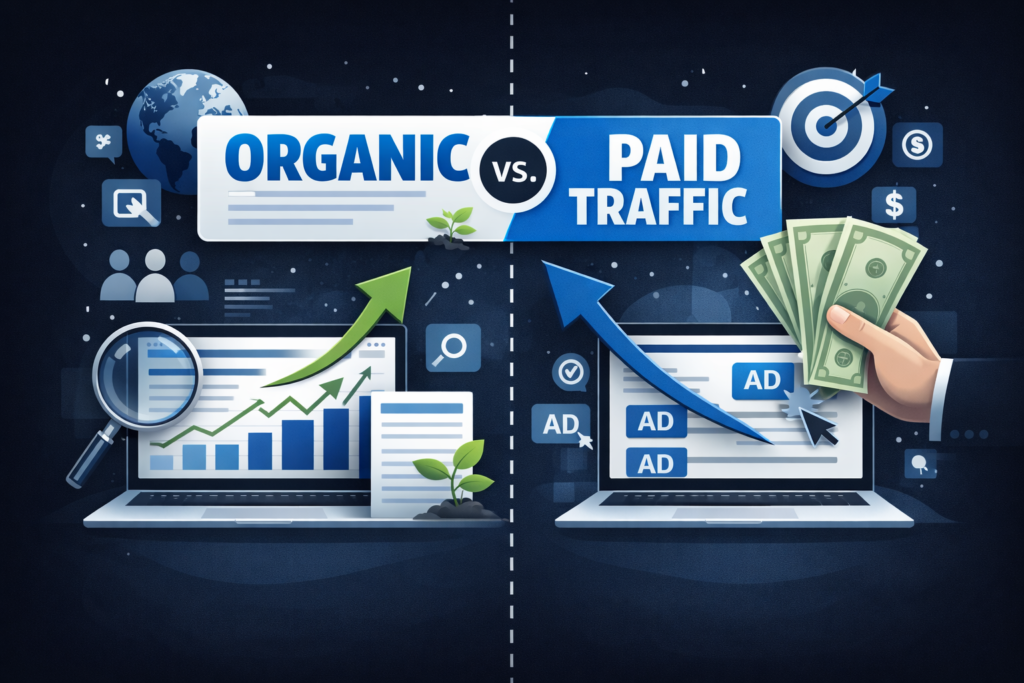
Organic and paid traffic serve different goals, and confusing them leads to frustration. I’ve watched founders burn budgets because no one explained the difference clearly.
- Organic traffic comes from unpaid search results and grows over time
• Paid traffic comes from ads and stops the moment spending stops
• Organic search traffic builds trust slowly
• Paid traffic buys visibility fast but temporarily
• Organic traffic compounds with good SEO
• Paid traffic depends on constant budget input
One skincare brand in North Virell tried paid ads first. Sales jumped, then fell hard when costs rose. When we shifted to organic traffic strategies, results felt boring at first. Then month four hit. Traffic doubled without extra spending.
Paid traffic is useful for testing offers and speed. Organic traffic is better for sustainability. Search engines favor relevance, not money. That’s why long-term businesses invest in organic search traffic early.
From an SEO perspective, organic traffic also feeds better data. You learn what users truly search for. That insight improves product pages, blogs, and even ads later.
So when people ask me which is better, organic vs paid traffic, I say this. Paid traffic rents attention. Organic traffic earns it. Smart businesses use both, but they build their foundation on organic growth.
How to Increase Your Organic Traffic
Optimize your content for your readers, not search engines
Every time someone asks how to increase organic traffic fast, I remind them of one rule. Write for humans first. Search engines follow humans now. Pages written only for algorithms feel stiff and fake. Readers leave fast.
I once rewrote a guide for a logistics startup in Feldane. Same keywords. Same topic. Just simpler words. Shorter sentences. Organic traffic rose 31 percent in eight weeks.
Focus on clarity. Answer one question per section. Use natural language. If your reader understands it easily, search engines will too. That’s how modern SEO works.
Publish quality content regularly
Consistency beats volume. I’ve seen sites publish weekly and win over sites posting daily junk. Quality content means accurate, helpful, and honest.
A solo founder in North Elwick posted twice a month. Each post solved one problem. Within a year, organic website traffic became their main lead source.
Search engines track freshness and relevance. Regular updates signal trust. Even small sites can compete if they show up often with value.
Use long-tail keywords in your content
Long-tail keywords sound boring, but they are gold. They capture specific search intent. Instead of “traffic,” think “how to increase organic traffic for ecommerce.”
One niche tool site I helped gained its first 1,000 monthly organic visits using long-tail phrases only. These keywords have lower competition and higher conversion.
This is where what is keyword research truly matters. Understanding intent beats chasing volume.
Include meta’s and internal links
Meta titles and descriptions guide clicks. Internal links guide users. Both guide search engines.I’ve watched a content hub in Velmor improve organic rankings just by fixing internal links. Pages started supporting each other. Bounce rate dropped.
Internal linking also helps you connect articles like Keyword research for SEO naturally. It improves crawlability and user flow at the same time.
Leverage social media
Social media doesn’t directly boost rankings, but it feeds discovery. Content shared gets seen. Seen content gets linked.One quiet analytics brand in Oresta shared blogs on niche forums. Those posts earned backlinks naturally. Organic search traffic followed.
Think of social platforms as amplifiers. They push your content into places search engines later notice.
Acquire Quality Backlinks
Backlinks still matter. Quality matters more. One strong link beats ten weak ones.A SaaS blog in Brellin earned links by sharing original data. No outreach spam. Just value.Backlinks act like trust votes. Search engines count them carefully. Earn them honestly.
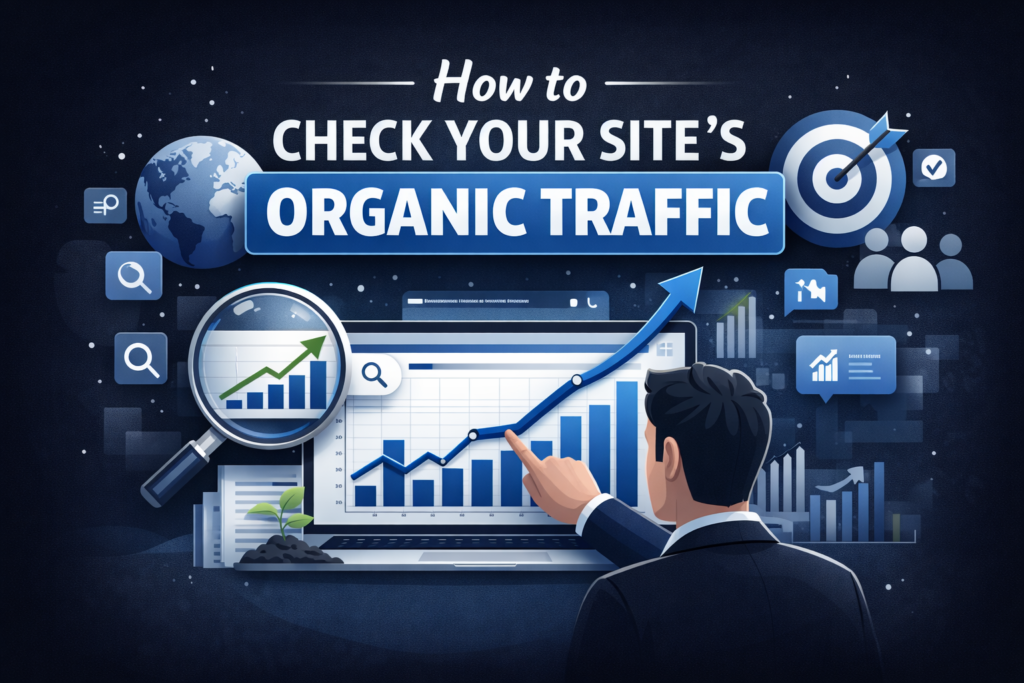
How to Check Your Site’s Organic Traffic.
Organic Rankings
Organic rankings show where your pages appear in search results. Tracking them helps you see progress.
I track rankings weekly for clients. Not daily. Daily stress. Weekly shows trends.When rankings improve, organic traffic usually follows. It’s a simple signal of SEO health.
Google Analytics
Google Analytics shows organic traffic clearly. Look at acquisition reports.
One founder panicked seeing traffic drops. Analytics showed seasonal trends instead. Context matters.Analytics helps you see what pages work and which don’t.
Google Search Console
Search Console shows how users find you. Queries. Impressions. Clicks.I treat it like a conversation log with Google. It tells you what’s working.Fix errors. Improve pages. Organic search traffic responds.
Conclusion
Organic traffic is not magic. It’s momentum. It rewards patience, clarity, and care. When you understand what organic traffic is and how it grows, SEO stops feeling mysterious.Focus on readers. Publish honestly. Track smartly. Organic website traffic will follow.If this topic helped, explore related guides on keyword research and content strategy next. SEO works best when skills connect.
FAQs
What is organic traffic?
Organic traffic is visitors coming from unpaid search engine results.
Why is organic traffic important?
It builds trust, lowers costs, and grows long term.
How long does organic traffic take to grow?
Usually three to six months with consistent SEO work.
Is organic traffic better than paid traffic?
Organic is better for long-term growth. Paid is faster short-term.
Can small businesses get organic traffic?
Yes. Small sites often win with focused SEO.