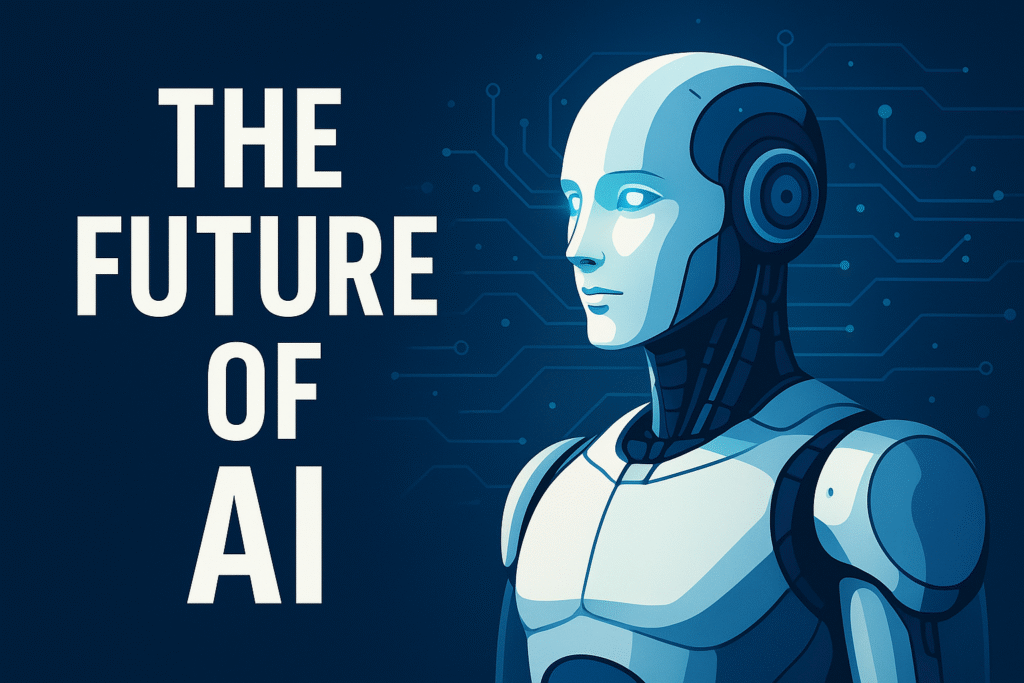
Artificial Intelligence (AI) is no longer a futuristic dream—it’s the driving force behind innovation in every industry today. From healthcare and business to education and creative fields, AI is reshaping how we live, work, and think. But what does the future of AI truly hold? Let’s explore the exciting possibilities, challenges, and transformations that lie ahead.
1. AI-Powered Automation and Workforce Transformation
In the coming years, automation powered by AI will redefine the global workforce. Repetitive tasks—such as data entry, scheduling, or basic analysis—will be increasingly handled by intelligent systems. However, this doesn’t mean humans will be replaced. Instead, professionals will focus more on creativity, strategy, and innovation, while AI handles routine operations.
The future workplace will thrive on human-AI collaboration, boosting productivity and decision-making across industries.
2. Smarter Healthcare with Predictive AI
Healthcare is one of the biggest beneficiaries of AI evolution. Future AI systems will predict diseases even before symptoms appear, thanks to advanced data analytics and wearable technology. Personalized treatment plans and AI-powered diagnostics will save lives, reduce costs, and increase accessibility to medical care worldwide.
In short, AI will revolutionize healthcare by shifting from treatment to prevention.
3. AI in Education and Learning
Education is undergoing a digital transformation led by AI. Intelligent tutoring systems, personalized learning paths, and virtual classrooms are making education more accessible and adaptive.
The future of AI in education will create customized experiences for students, helping them learn at their own pace while giving teachers data-driven insights to enhance learning outcomes.
4. The Rise of Ethical and Responsible AI
As AI grows smarter, so does the need for ethical governance. Future AI development will focus on fairness, transparency, and accountability. Governments and organizations will establish global standards to prevent bias, ensure data privacy, and maintain human control.
The ethical use of AI will be the foundation of sustainable innovation in the next decade.
5. AI and Creativity: The New Frontier
Contrary to popular belief, AI isn’t just about logic—it’s becoming a creative partner. From generating art and music to writing stories and designing products, AI is unlocking new forms of human expression.
The future of AI creativity will blend human imagination with machine intelligence, leading to a new era of digital artistry and innovation.
6. Challenges Ahead: Balancing Progress and Control
While the future looks bright, AI also presents challenges. Concerns about job displacement, data misuse, and deepfake technology are real. To ensure a positive impact, collaboration between policymakers, developers, and society is essential.
Responsible innovation and public awareness will shape how AI benefits humanity in the long run.
Conclusion
The future of AI is filled with endless potential and promise. As machines become more intelligent, our responsibility to guide their growth increases. Whether it’s in business, healthcare, education, or creativity, AI will continue to be a catalyst for human progress—enhancing lives, solving problems, and shaping a smarter world.
One thing is certain: the future belongs to those who embrace AI, not fear it.